Mannequins & the Aesthetics of Hollowness
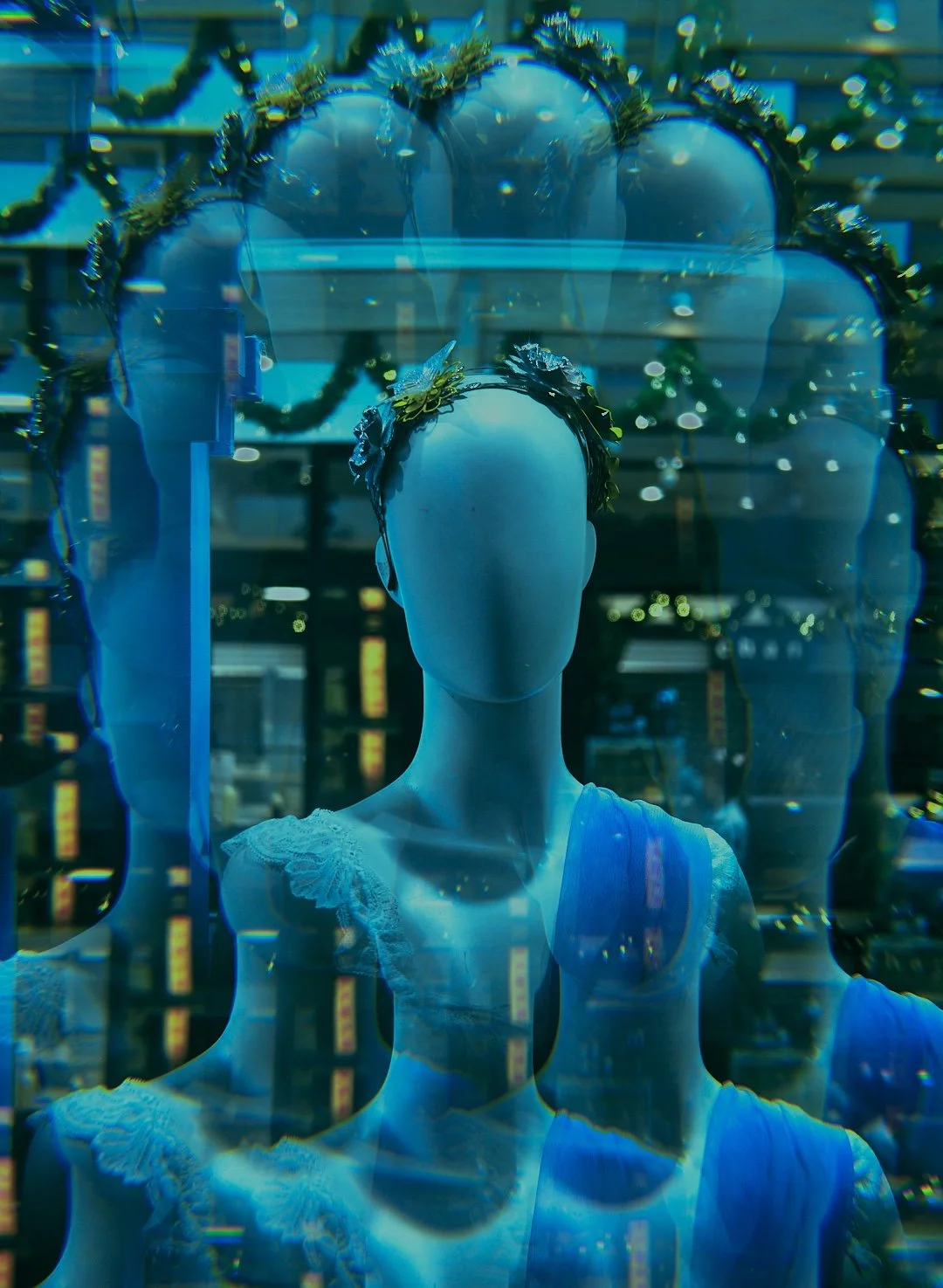
Bangkok, 2025
I find it appealing that it is not really an object designed to represent the human, but rather a simplified archetype (an empty vessel which can project social norms). Unlike classical sculptures, which try to imitate life, mannequins are intentionally lifeless. They get to be simultaneously “anyone” and “no one.” As much as Jung defined archetypes as empty forms filled by cultural meaning, mannequins are archetypes stripped of particular meaning. Their identities are shaped by consumer culture. Visible but hollow, standardized yet endlessly customizable.
It reminds me much of contemporary liminal art, which basically explores spaces that feel uncannily familiar yet are devoid of human presence. Both liminal spaces and mannequins trigger the return of the familiar in an estranged form. And though many times thematic of indie games, they also started to deviate from the original horror themes and became fetishized and aesthetic, to a point that they now also constitute some form of internet fantasy thematic on their own. In this way, the mannequin, as well as liminal spaces, have somewhat managed to become symbolic… if hollowness can yet achieve meaning.
As mannequins stand as silent figures in transitional spaces, they are not substitutes for humans, but mirrors of what humans have become under postmodern conditions. It does remind me a lot of Baudrillard’s quote: “The simulacrum is never that which conceals the truth—it is the truth which conceals that there is none. The simulacrum is true.”
In a sense too, when shooting at them, I feel essenceless presence within.