Practitioners Journal
•
Practitioners Journal •
Lorem Ipsum
Lorem ipsum dolor sit amet, consectetuer adipiscing elit. Aenean commodo ligula eget dolor. Aenean massa. Cum sociis natoque penatibus et magnis dis parturient montes, nascetur ridiculus mus. Donec quam felis, ultricies nec, pellentesque eu, pretium quis, sem. Nulla consequat massa quis enim. Donec pede justo, fringilla vel, aliquet nec, vulputate eget, arcu. In enim justo, rhoncus ut, imperdiet a, venenatis vitae, justo. Nullam dictum felis eu pede mollis pretium. Integer tincidunt. Cras dapibus. Vivamus elementum semper nisi. Aenean vulputate eleifend tellus. Aenean leo ligula, porttitor eu, consequat vitae, eleifend ac, enim.
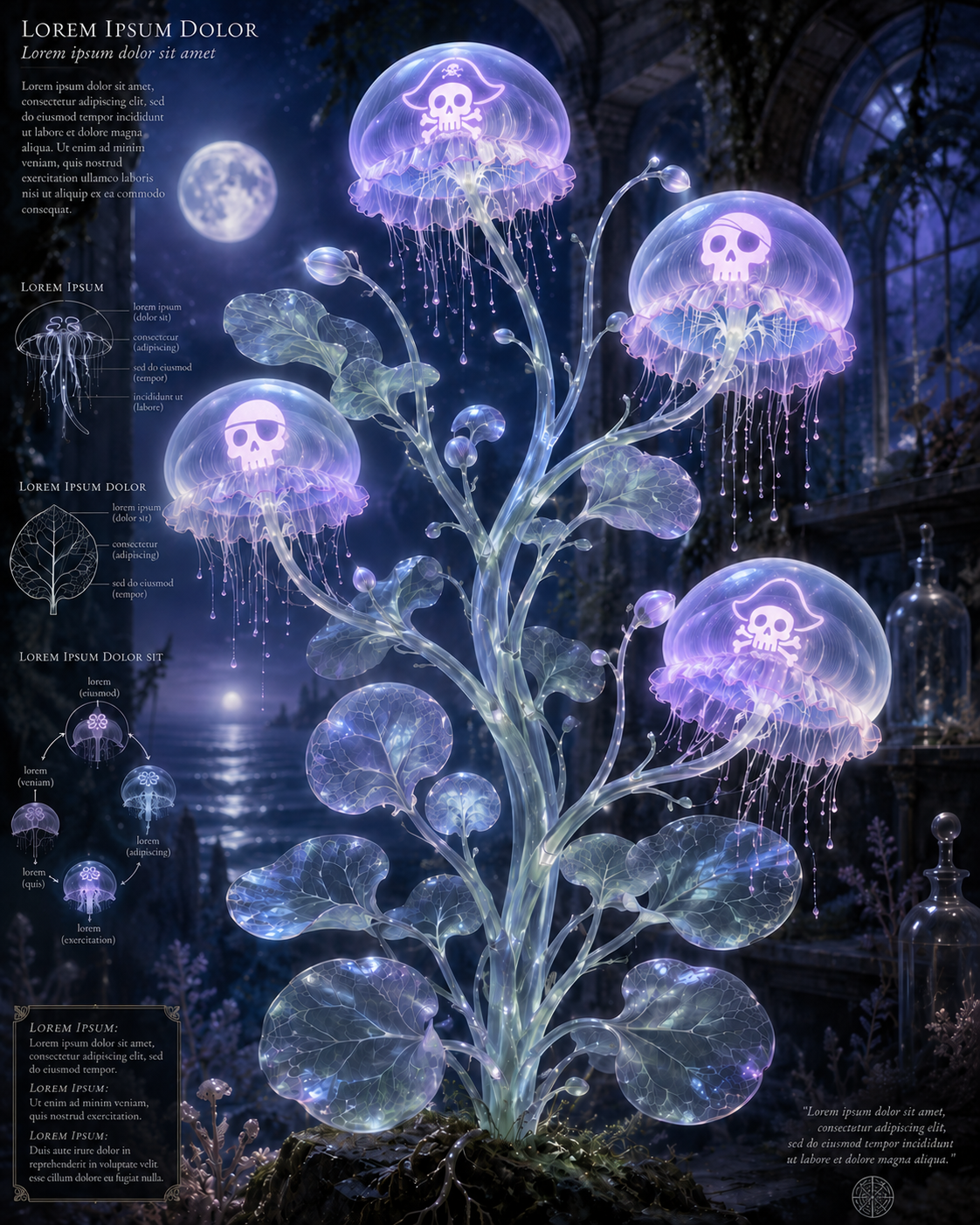
Lorem ipsum dolor sit amet consectetur adipiscing elit.
Aliquam lorem ante, dapibus in, viverra quis, feugiat a, tellus. Phasellus viverra nulla ut metus varius laoreet. Quisque rutrum. Aenean imperdiet. Etiam ultricies nisi vel augue. Curabitur ullamcorper ultricies nisi. Nam eget dui. Etiam rhoncus. Maecenas tempus, tellus eget condimentum rhoncus, sem quam semper libero, sit amet adipiscing sem neque sed ipsum. Nam quam nunc, blandit vel, luctus pulvinar, hendrerit id, lorem. Maecenas nec odio et ante tincidunt tempus. Donec vitae sapien ut libero venenatis faucibus. Nullam quis ante. Etiam sit amet orci eget eros faucibus tincidunt. Duis leo. Sed fringilla mauris sit amet nibh. Donec sodales sagittis magna.
Sed consequat, leo eget bibendum sodales, augue velit cursus nunc, quis gravida magna mi a libero. Fusce vulputate eleifend sapien. Vestibulum purus quam, scelerisque ut, mollis sed, nonummy id, metus. Nullam accumsan lorem in dui. Cras ultricies mi eu turpis hendrerit fringilla. Vestibulum ante ipsum primis in faucibus orci luctus et ultrices posuere cubilia Curae; In ac dui quis mi consectetuer lacinia. Nam pretium turpis et arcu. Duis arcu tortor, suscipit eget, imperdiet nec, imperdiet iaculis, ipsum. Sed aliquam ultrices mauris. Integer ante arcu, accumsan a, consectetuer eget, posuere ut, mauris. Praesent adipiscing.
Sed consequat, leo eget bibendum sodales, augue velit cursus nunc, quis gravida magna mi a libero.
Phasellus ullamcorper ipsum rutrum nunc. Nunc nonummy metus. Vestibulum volutpat pretium libero. Cras id dui. Aenean ut eros et nisl sagittis vestibulum. Nullam nulla eros, ultricies sit amet, nonummy id, imperdiet feugiat, pede. Sed lectus. Donec mollis hendrerit risus. Phasellus nec sem in justo pellentesque facilisis. Etiam imperdiet imperdiet orci. Nunc nec neque. Phasellus leo dolor, tempus non, auctor et, hendrerit quis, nisi. Curabitur ligula sapien, tincidunt non, euismod vitae, posuere imperdiet, leo. Maecenas malesuada. Praesent congue erat at massa. Sed cursus turpis vitae tortor. Donec posuere vulputate arcu. Phasellus accumsan cursus velit.


The Psychology of Control, Mono-Blue Decks in Magic: The Gathering
I think that when plotting out the game, the creators said: Let’s make wisdom a trickster-like force, and make it limiting; instead of creating a strategy, make the disruption of strategy its main trait. May their enemies perish by asphyxiation. Allow it to build up psychologically. After playing against a blue player several times, an opponent becomes defeated by the feeling that every possible action has been denied, installing the idea of limitation in their mind from the very start.
What makes mono-blue unique is that it does not need to overpower an opponent. Instead, it wins by creating limitations. A blue player restricts choices, delays threats, and slowly removes the opponent’s ability to execute their strategy. The most iconic embodiment of mono-blue’s philosophy is the Counterspell, which prevents threats from ever existing. What makes it appealing is that it is a common card, yet it can stand against god-like creatures or spells that would otherwise dominate the game.
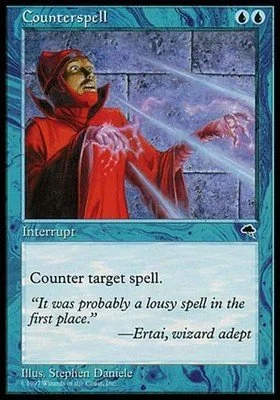
Wizards of the Coast. “Counterspell.” Magic: The Gathering, Tempest, 1997. Artwork by Stephen Daniele.
Two untapped Islands often make an opponent question whether their timing is right. This uncertainty creates a psychological battle where the blue player gains influence without even playing a card. A mono-blue player prevents threats from becoming meaningful by countering important spells, returning permanents, drawing cards, and controlling the pace of the game until the opponent has fewer and fewer options. Simply leaving two Islands untapped can completely change how an opponent plays, forcing hesitation and inefficiency. Mono-blue is considered one of the most strategic colors because it relies on reaction rather than aggression.
Blue creatures are canonically known for being weaker than those of other colors, but they compensate by relying on abilities rather than raw strength. Another important aspect of mono-blue strategy is information. Blue decks focus on drawing more cards and maintaining more options than the opponent. This is why forcing an opponent to lose cards from their library, commonly known as mill, feels naturally connected to blue. Winning through mill is not about attacking life totals, but attacking possibilities.
The opponent loses because their resources are exhausted. In this sense, treating the opponent’s library as their true hit points becomes the most logical blue strategy. A pair of Scalpelexis can do wonders in only a few turns. Or any other card. Whatever. Theoretically, a player only needs to stay one turn ahead to win.
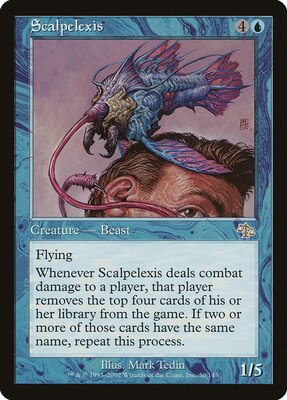
Wizards of the Coast. “Scalpelexis.” Magic: The Gathering, 10th Edition, 2007. Artwork by Mark Tedin.
The blue player is constantly calculating: What is the opponent trying to accomplish? Which card matters most? What should be stopped, and what should be ignored? Victory comes from making better decisions over time. Mono-blue represents one of the most unique philosophies in Magic: The Gathering. Rather than relying on aggression or overwhelming power, it wins through control, uncertainty, and exhaustion. Its greatest weapon is not the counterspell itself, but the fear and hesitation created by its possibility. A mono-blue player does not defeat an opponent by being stronger in the traditional sense; they slowly remove their ability to fight back.
The Aesthetic Re-Construction of Reality (in the Digital Era)
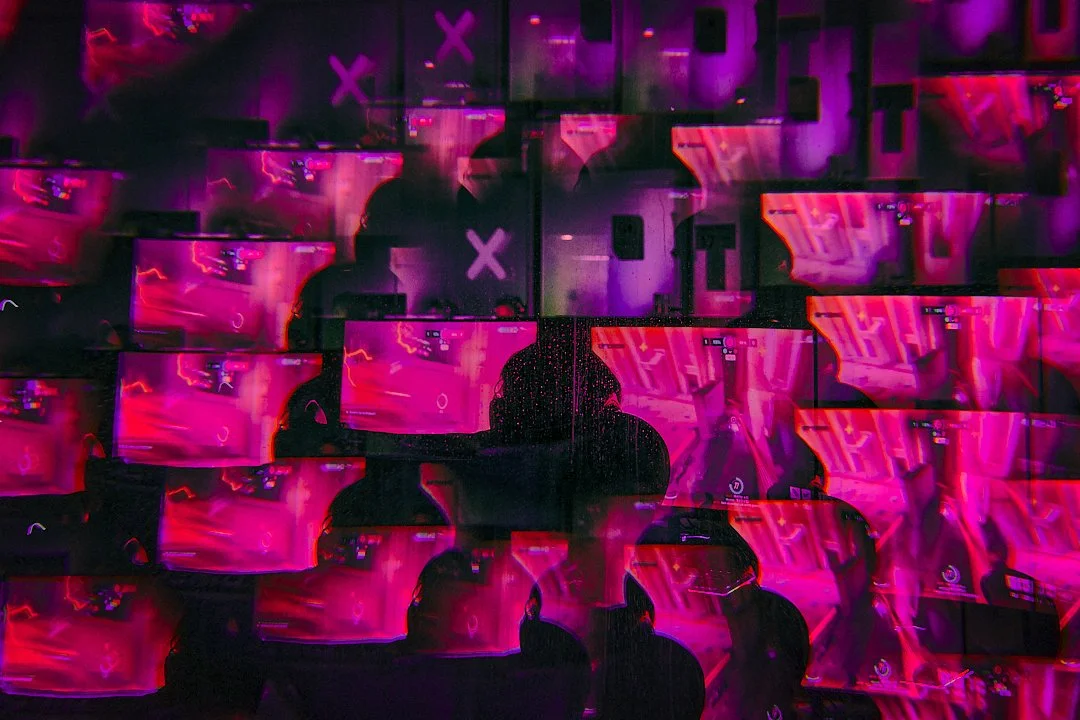
Some Guy on Some Crazy Journey (circa 2025)
As aesthetics shape what we want and ethics shape what we should want, I believe aesthetics can actually create belief systems of their own, as they influence wants and desires which can be subconsciously translated into ethical logic. Aesthetics often do not come from items alone; rather, they are articulated into belief systems that are served as a package.
Rather than an interpretation of reality, aesthetics are an edit of it. They need raw reality to interpret and transform as a supply for their vision. In this sense, every aesthetic is secondary to reality, but it utilizes it to the point that aesthetic production can become more meaningful to experience for the individual than raw phenomenological reality. The internet makes this process much stronger because platforms are built around repetition. Yet, in another way, it only makes its consumption much more customizable than in previous times, where everything was shaped by mainstream storytellers. Nowadays, through simple browsing, users are repeatedly shaping their exposure to a specific aesthetic world.
Internet aesthetics such as cyberpunk, liminality, vaporwave, and others are not just visual styles. They are complete symbolic worlds with their own meanings. Each aesthetic creates a specific way of seeing reality. They do not only show people what things look like; they suggest what kind of life, personality, and emotional experience someone might want.
Cyberpunk, beyond the beauty of neon lights, rainy streets, loneliness, and futuristic decay, seems to long for a dystopian world. It is very different from utopian societal contexts. Within it, one can interpret a preference for transhumanist ideology or a subcultural trend that challenges the perception that technology is improving the lifestyle of the majority, instead suggesting that it may enhance social gaps. The joy an individual finds in certain styles changes their preferences and belief systems over time, especially through what they interpret as meaningful.
People no longer only define themselves through traditional categories like family, profession, nationality, or community alone. They also define themselves through visual worlds and aesthetic affiliations often consumed online. Yet, although aesthetic identity can be positive because it helps people discover themselves, it can also become restrictive. The aesthetic that once provided freedom can become a limitation.
Brands understand this power and use aesthetics to influence customers. The customer is not only buying an object — they are buying access to a world. Strong branding is therefore about creating a consistent system of desire. In this sense, it is important to realize how much power over perception social media algorithms actually give users, and how much they simultaneously sandbox them within a system that monetizes their attention, socializes their experiences, and shapes their consumer preferences.
Best Movie This Year Yet
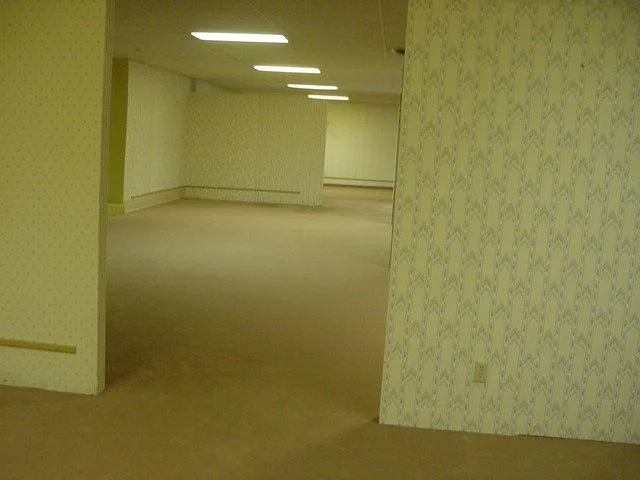
The coolest 4chan feature is anonymity, which implies a lack of authorship by default. I believe such a lack of authorship became quintessential to the development of The Backrooms universe and the liminal trend across the Internet. As nobody fully owned the Backrooms, everyone felt free to reshape them imaginatively. Liminality becomes universal precisely when it loses a clear identity, suspended between meanings; and in that suspension, it becomes archetypal. And that’s what, in my opinion, sparked the whole phenomenon.
The Backrooms are therefore not simply a fictional location, but a collective psychological space for internet users. They represent emptiness, memory, nostalgia, and artificiality all at once. This is why I find the adaptation of the Backrooms into cinema so culturally important. Where most movies require structure, plot, characters, and explanation, the original Backrooms concept was cool af because it resisted explanation.
Perhaps the biggest challenge for the movie's author was to create enough canon for the Backrooms to function as a universe (further explained on his YouTube), without destroying the ambiguity that made them meaningful in the first place. Yet, at the same time, it reflects how traditional diffusion platforms, such as cinema, have had to adapt to more horizontal thematics, such as liminality, in order to keep relevance.
Liminal art works because it is unified not by authorship, but rather by the lack of it. In this sense, the Backrooms show how internet culture creates mythology today. It comes from anonymous posting, image circulation, and the socialization of meaning. They are not solely owned by one creator, but rather expanded by many.
Broken Image Icons

Ghostly Icons
While trying to fix this page, I stumbled across a broken image icon, which made me realize that these images possess their own peculiar semiotics. A broken image icon is a visual cue that appears when an image cannot be displayed, signaling the absence of content that was expected to load.
Whether caused by missing files, network issues, corrupted data, or unsupported formats, these icons use familiar symbols—broken frames, incomplete pictures, or sad file illustrations—to communicate failure and unavailability.
Broken image icons are almost born devoid of meaning. Their objective message is simple: what you came for is not available. Yet their imagery always attempts to depict the denied object itself—a sad document, a fractured landscape, a damaged photograph. This is not what you came to see, but rather a symbolic substitute: a placeholder image stripped of meaning so that you can infer what happened to the thing you were actually looking for.
The context in which their semantics flourish is equally evocative: a forum dedicated to a camera nobody uses anymore; a personal website maintained by someone who seems to have disappeared years ago; or a forgotten page whose layout remains intact while its links have decayed.
Further than that, I consider that they belong to the same elementary category as empty hotel corridors, mannequins, abandoned shopping malls, or buildings that seem peripheral to reality, much like blank pages in books. There is something strangely appealing about things that were meant to contain life but no longer do, or that inhabit reality in an uncanny way, linking more substantial elements while standing with one foot outside of them.
Then again, they are as forgettable as they are annoying. They are the symbolization of dysfunctionality, or the remembrance that the internet has its own forms of decay. Domains expire. Servers disappear. Links break. Entire platforms vanish. Images evaporate. The architecture remains standing while pieces of reality quietly fall out of it. Every now and then, I find myself wandering through broken websites. Unless the connection is gone entirely, in which case I end up playing Google's T-Rex game.
(Partially) Off grid
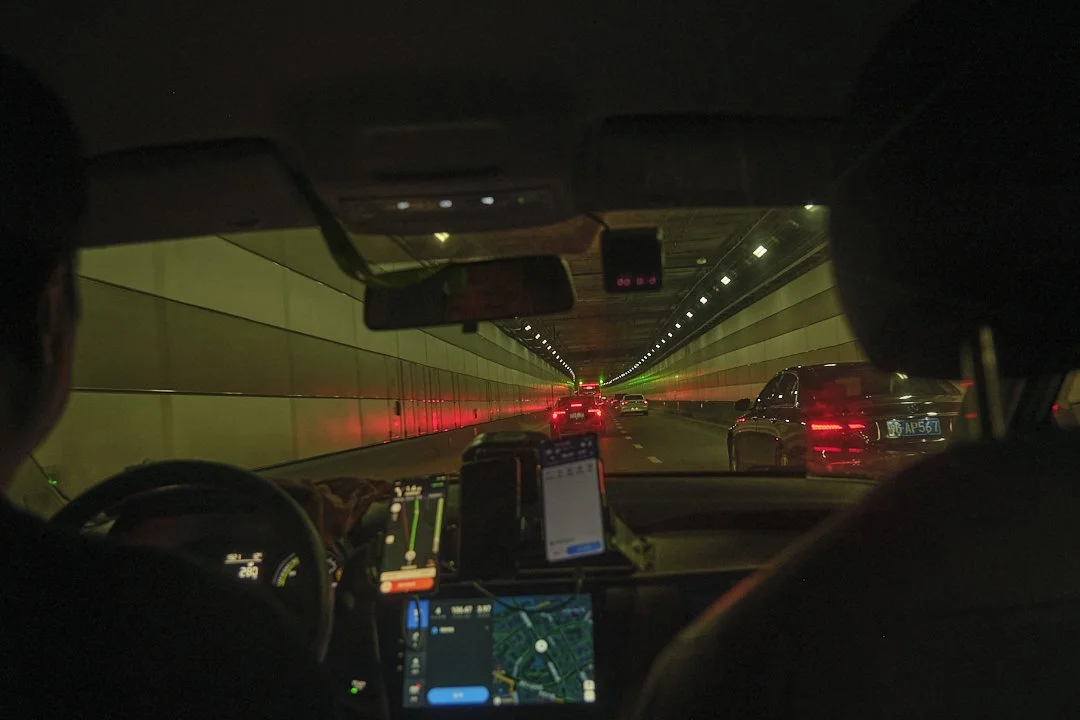
I wish I had nothing to think about, and just swim like a jellyfish, no brain and no feelings, just blu blu around the Holy Spirit. And with this idea, I closed my eyes in a hotel in Chongqing, and just tried to cut all external noise and reconnect with the divine while my camera battery was loading right next to my bed. I had watched many gnostic videos online, and I still had a blurry idea of what to do and how to accomplish it, which basically meant taking a ton of pictures. And yet, beyond the byproduct of the trip itself, there wasn’t really anything to do, because action can in many ways become noise to a mind that has not become still on its float.
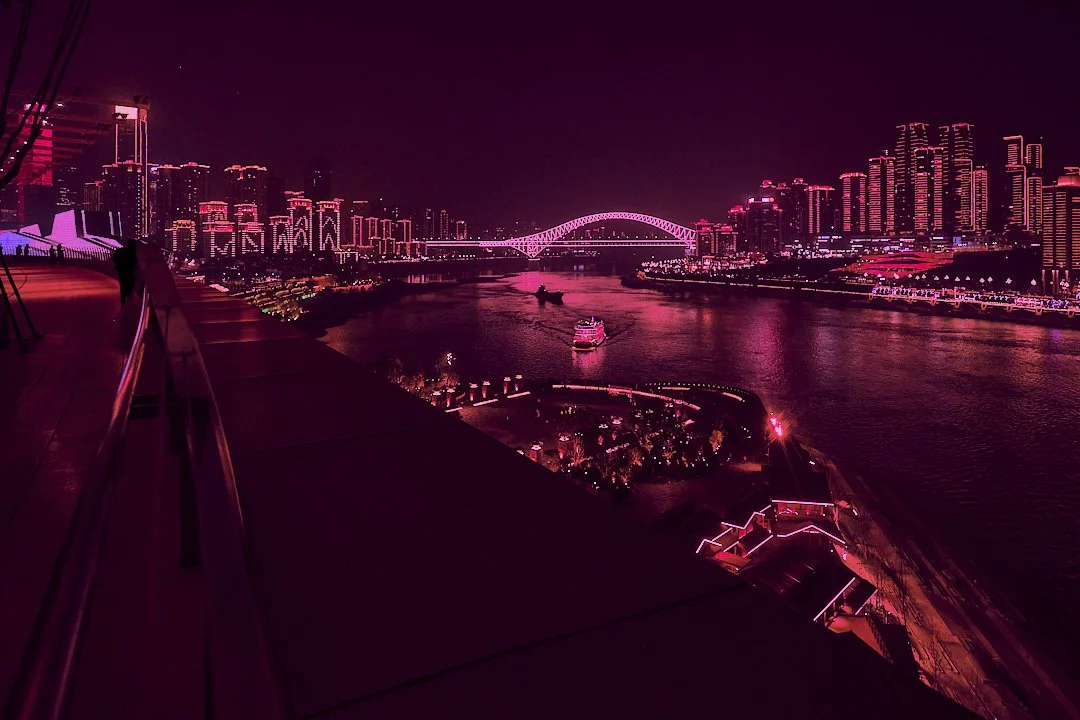
I got lost more than once until I figured a way back, guiding myself through building positioning the same way ancients used to guide themselves through stars (until I got my connectivity sorted out). And when regained full connectivity, I felt it wasn’t important anymore. I wanted to be far enough to reach myself.
I had dreamt about this place back in the day. And the materialization of a dream is subconsciously empowering and allows the user of the mind to live in the present tense. Before, I had imagined this place would give me the pearl. Now there wasn’t anything to receive. Hence, here I was, only two weeks before I took a plane to Shanghai. Chongqing didn’t disappoint me. It was marvelous. The architecture felt like it was out of a dream. This way, I walked up and down and explored all the corners I could. First time in a new city by own that I didn’t feel completely lost, but rather found a sense of unsuspected familiarity, intuited by videos and photos I had forseen online.
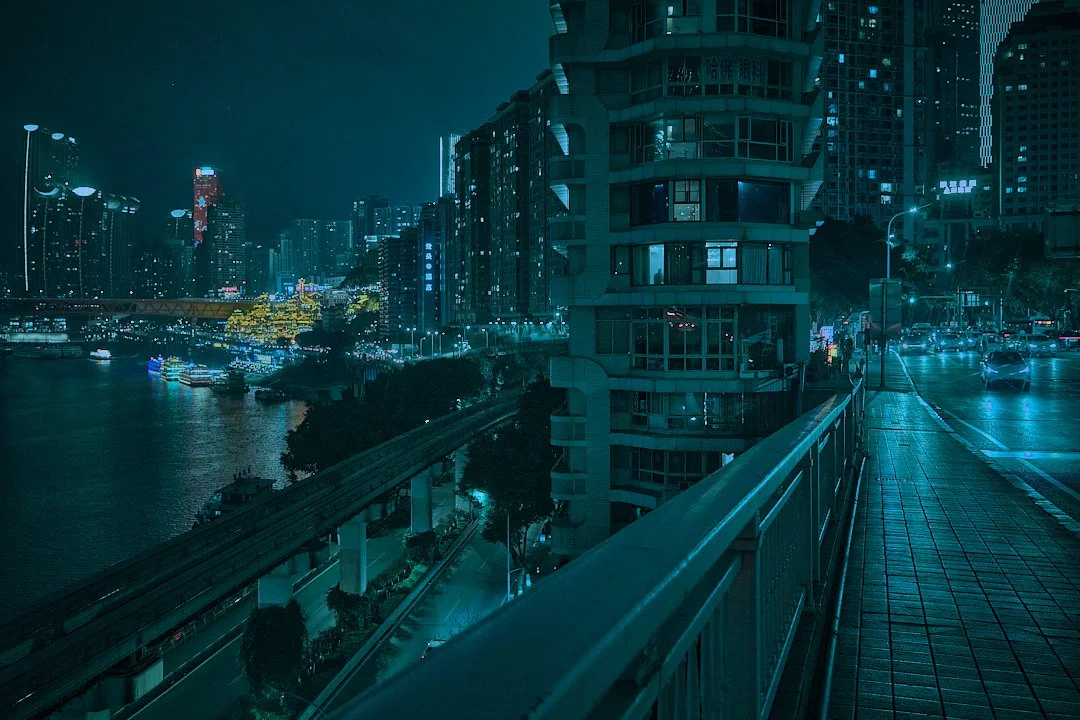
Loneliness was good. At a point, my consciousness starts to feel concealed in common narratives, as if stuck in some form of a show with recurrent characters and roles, and suddenly you get trapped in days which turn to weeks, weeks which turn to months, and so. There is a intuition of something not being grasped, and a feeling you might have lived different lives, met different people, and done life just alike. The quality of a still mind should be to live in the present tense without much conflict. As any story needs a plot, losing all conflicts redeems the user from their stories.
Taken from Above
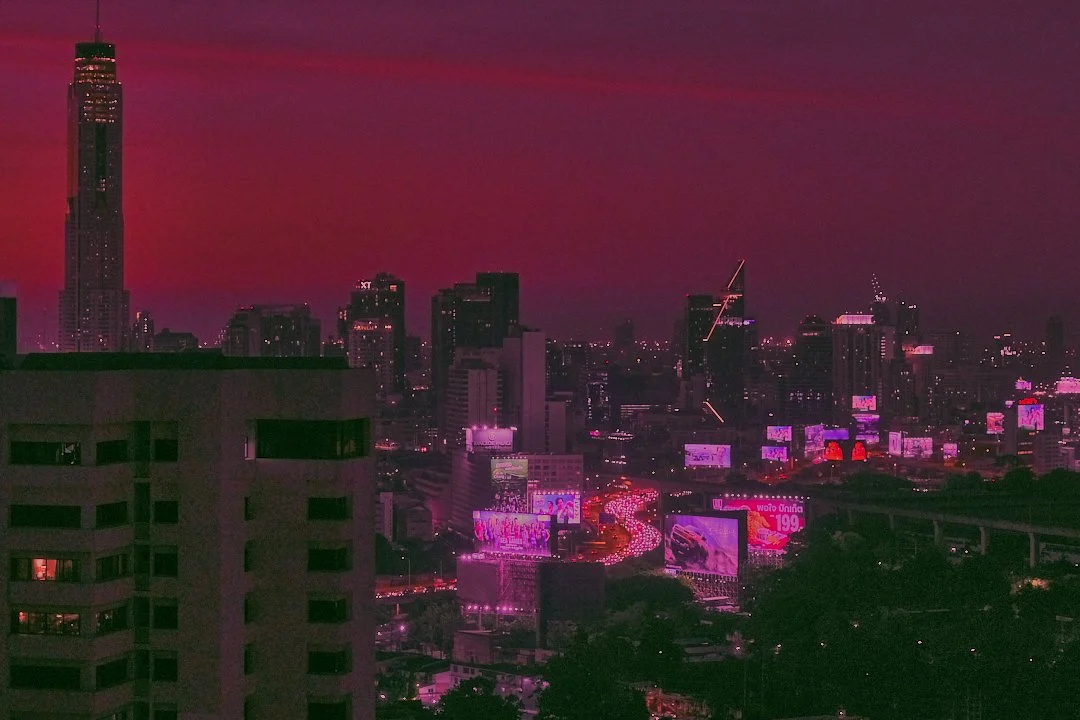
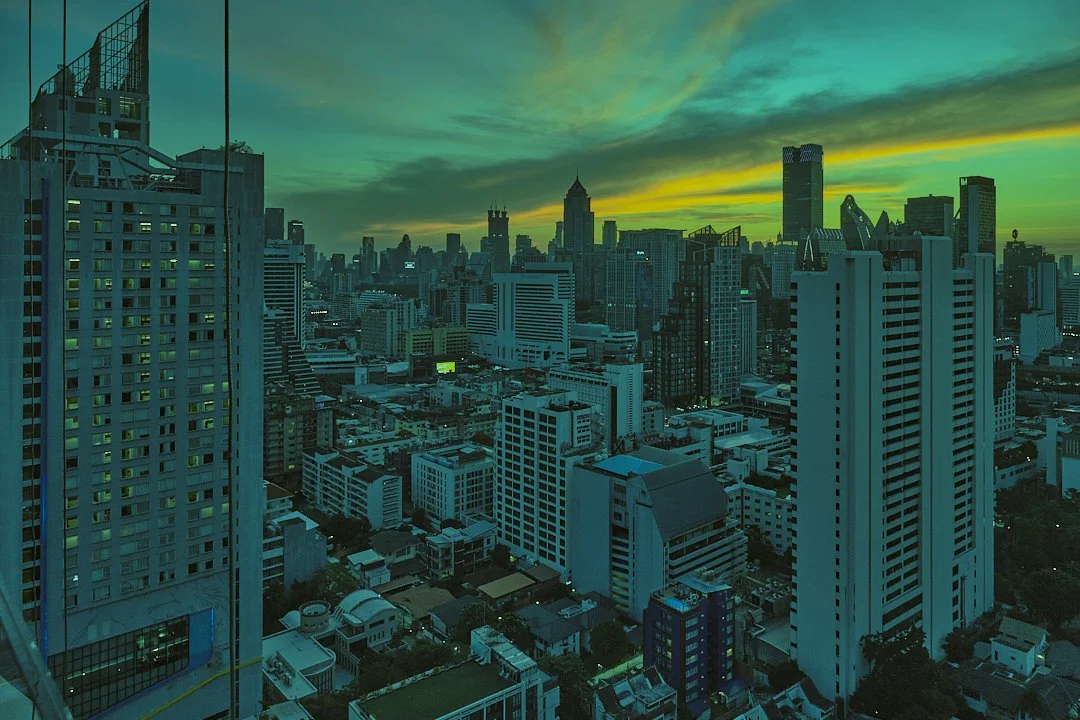
What’s cool about Bangkok is that it has an incredible number of rooftop bars. I took these photos from Above Eleven as I always try to visit Peruvian restaurants when going here or there.
Though I often push the sky’s colors in different directions when shooting and editing, my home city (Lima) is known for having a grey sky most of the year. Yet it’s not really a sad grey, but rather a chromatic one. Sometimes, late at night, it does take on a strange reddish tone. That's cool to me because it looks surreally fake, as if it could be easily blown away.
I remember that when I was in high school, I found a huge rooftop on top of a shopping mall. The fooftop was so big that it made me think of a landing field for people having out-of-body experiences (you’re supposed to envision a place to spawn if you want to achieve one). That place (if visited just after sunset) used to fill with flocks of small birds flying very low, not too far from the viewer. That was super pretty. I never took pictures of that. But from then on, I developed a penchant for rooftop shots.
I think, to a point, the beauty of the sky above the city reflects how what is limitless (the sky) becomes a kind of negative space to what is human. It puts things into scale. Everything minimizes to the extreme. The city unfolds as a maze with constant flow yet stagnancy within the concrete walls. Still, when taking these shots in Bangkok, I thought of other rooftops and places, and they all feel like variations of the same place: a bit of a threshold where the human scale dissolves. The sky, somehow, flattens time and memories.
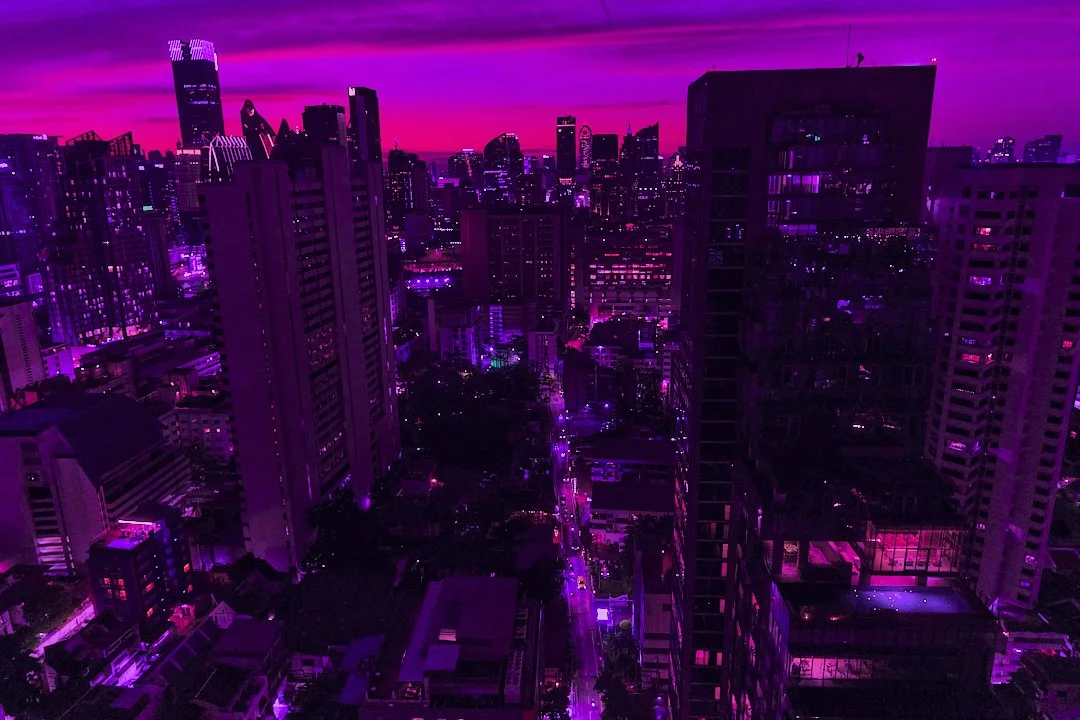
Mannequins & the Aesthetics of Hollowness
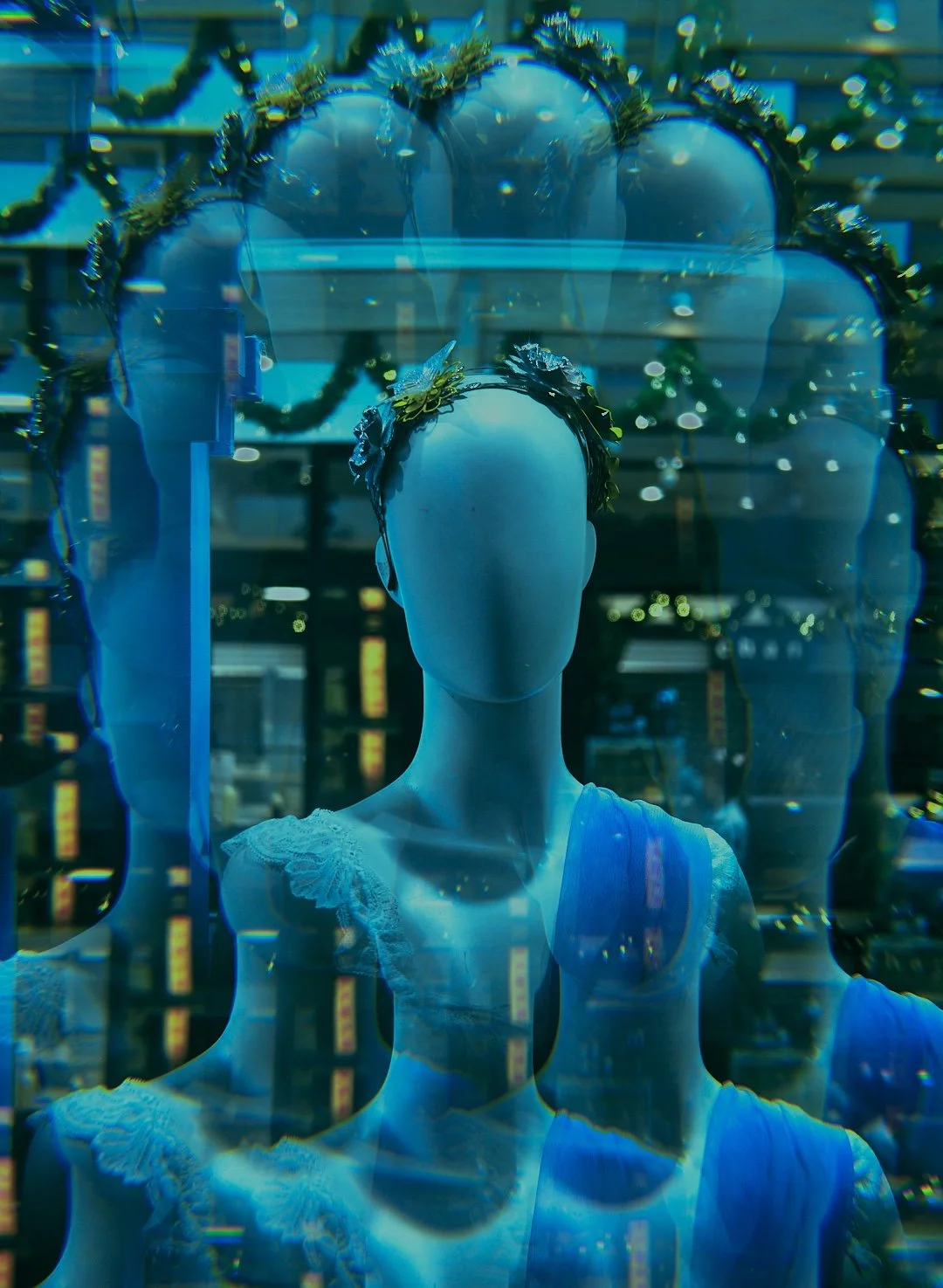
Bangkok, 2025
I find it appealing that it is not really an object designed to represent the human, but rather a simplified archetype (an empty vessel which can project social norms). Unlike classical sculptures, which try to imitate life, mannequins are intentionally lifeless. They get to be simultaneously “anyone” and “no one.” As much as Jung defined archetypes as empty forms filled by cultural meaning, mannequins are archetypes stripped of particular meaning. Their identities are shaped by consumer culture. Visible but hollow, standardized yet endlessly customizable.
It reminds me much of contemporary liminal art, which basically explores spaces that feel uncannily familiar yet are devoid of human presence. Both liminal spaces and mannequins trigger the return of the familiar in an estranged form. And though many times thematic of indie games, they also started to deviate from the original horror themes and became fetishized and aesthetic, to a point that they now also constitute some form of internet fantasy thematic on their own. In this way, the mannequin, as well as liminal spaces, have somewhat managed to become symbolic… if hollowness can yet achieve meaning.
As mannequins stand as silent figures in transitional spaces, they are not substitutes for humans, but mirrors of what humans have become under postmodern conditions. It does remind me a lot of Baudrillard’s quote: “The simulacrum is never that which conceals the truth—it is the truth which conceals that there is none. The simulacrum is true.”
In a sense too, when shooting at them, I feel essenceless presence within.
moonjelly.jpg
Although I normally like to make single prints of my photos, I wish there to be one piece that anyone can access and use however they want (as a wallpaper, to print, or just to keep).
A sealed acrylic tank with Moon Jellyfish under blue-purple LED lighting, making it look like living holograms. It sorta gives the vibe of a bio-display unit embedded in aging cyberpunk infrastructure. Resembles a PlayStation sci-fi video game. There, it’s written: Moon Jelly Aurelia aurita, and this photo was saved as moonjelly.jpg on my desktop.
In my belief, symbols, knowledge, and creative works gain power through accessibility and reproduction. By allowing this precise work to be copied and distributed, my intent is amplified; therefore, giving it away ultimately serves my own benefit.
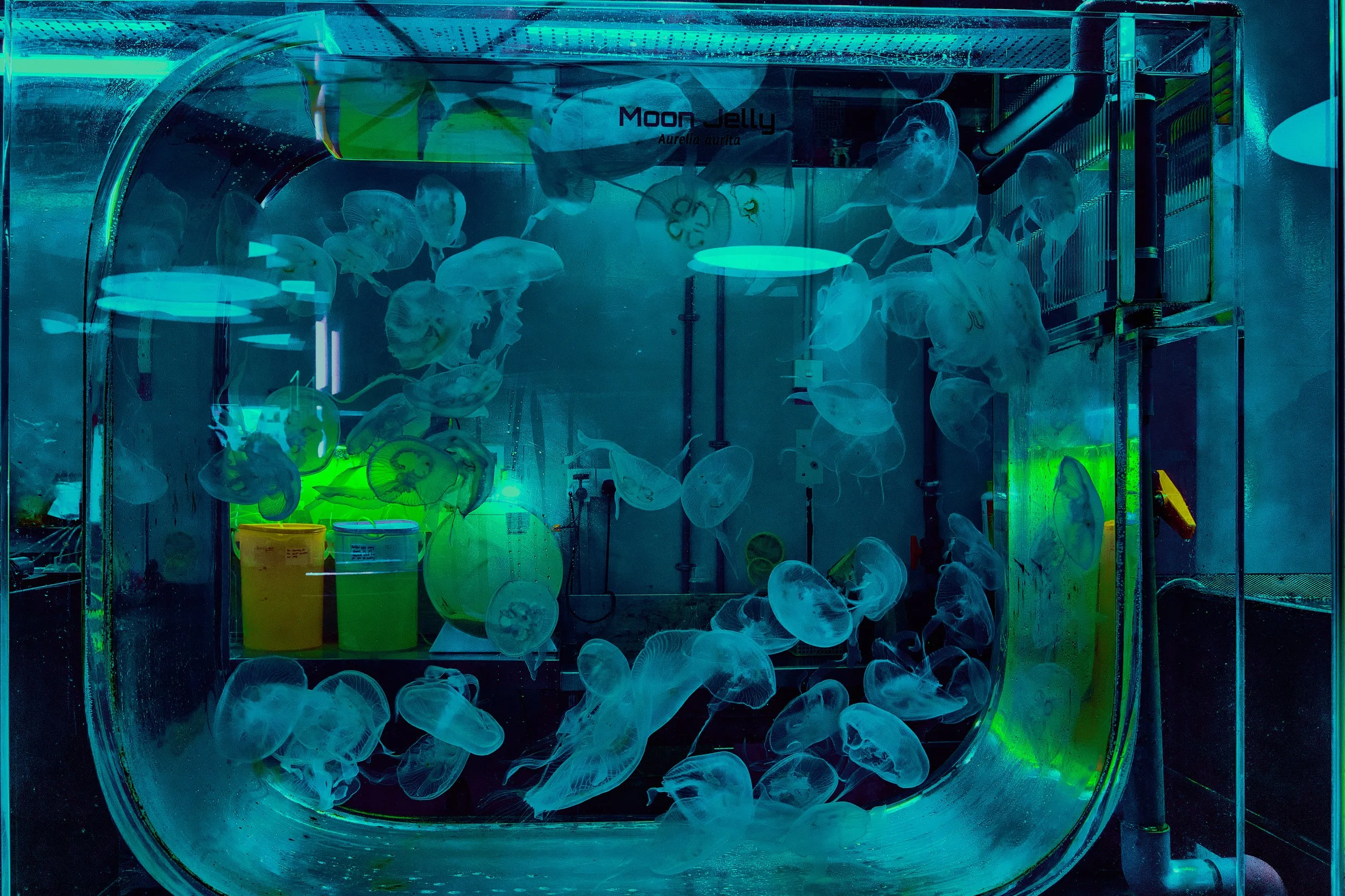
moonjelly.jpg; KL 2023
Interrupted series around past Halloween
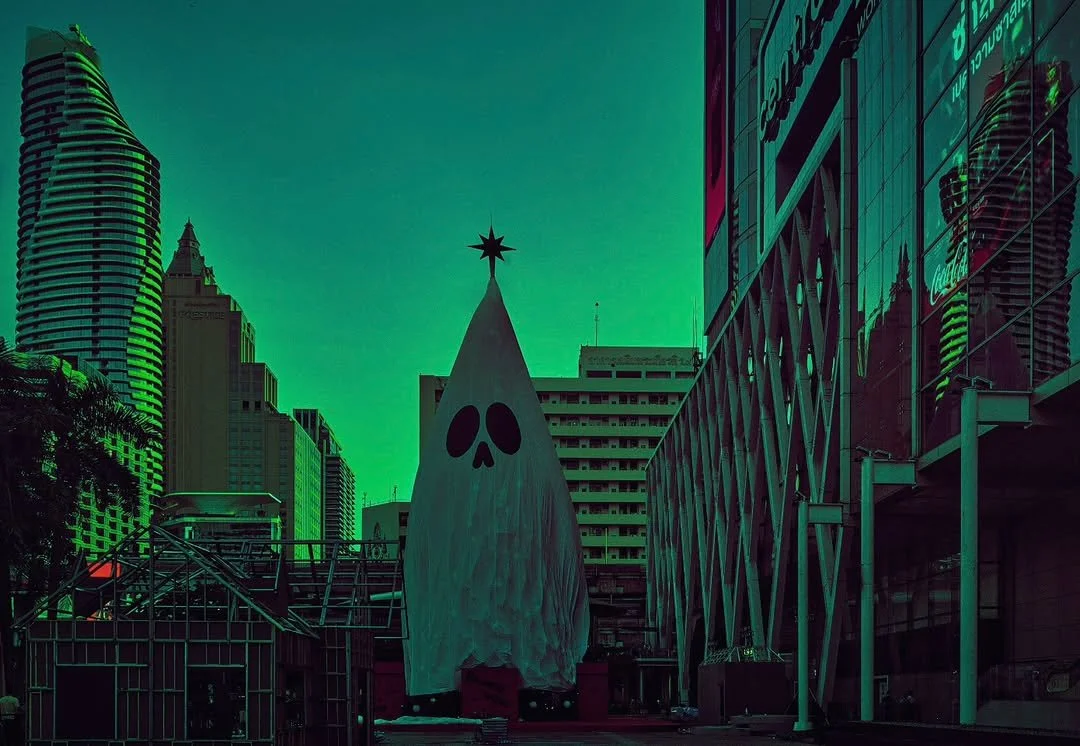
Central World Ghost
I arrived in Bangkok without a reason. I took an airport taxi to the hotel. It gave off the vibe of a great hotel back in the day, now cast into oblivion, with old-time furniture and blurry mirrors (as if seconds were dusting off in milliseconds and remained trapped in the reflection of amber, moldy lights). From this, I had the idea of shooting a series with a haunted hotel theme. It would be composed of: a photo of the elevator entrance, a photo of my reflection in the elevator mirror, a photo of the corridors, a photo of my room, a photo of the pool, an exterior photo of the hotel, a photo of the (empty) restaurant, and a photo of the (empty) gym.
The idea revolved in my mind as I spent my very first days strolling around places I had been to before. For example, I went to my old neighborhood and shot the daily life of the people there. I went to check small fashion shops. I ate a burger. I sat in different coffee shops to let time go by. I had so many coffees. Nothing had changed. Just people eating out. Cats passing by. People talking to the wind. Bangkok speaks to itself.
And so, having chilled just enough, I decided to start shooting. The first photo would define the aesthetic of the series. First pic first. I grabbed a shot of the elevator at the entrance (it was meant to be the introduction). I gave the images a greenish look, as if ectoplasm had been spread through the lighting and shadows during the edit. Just after that, I published it on Instagram and wrote “now look at this” in Thai as the caption. The chosen location tag was creepypasta (a reference to the horror theme).
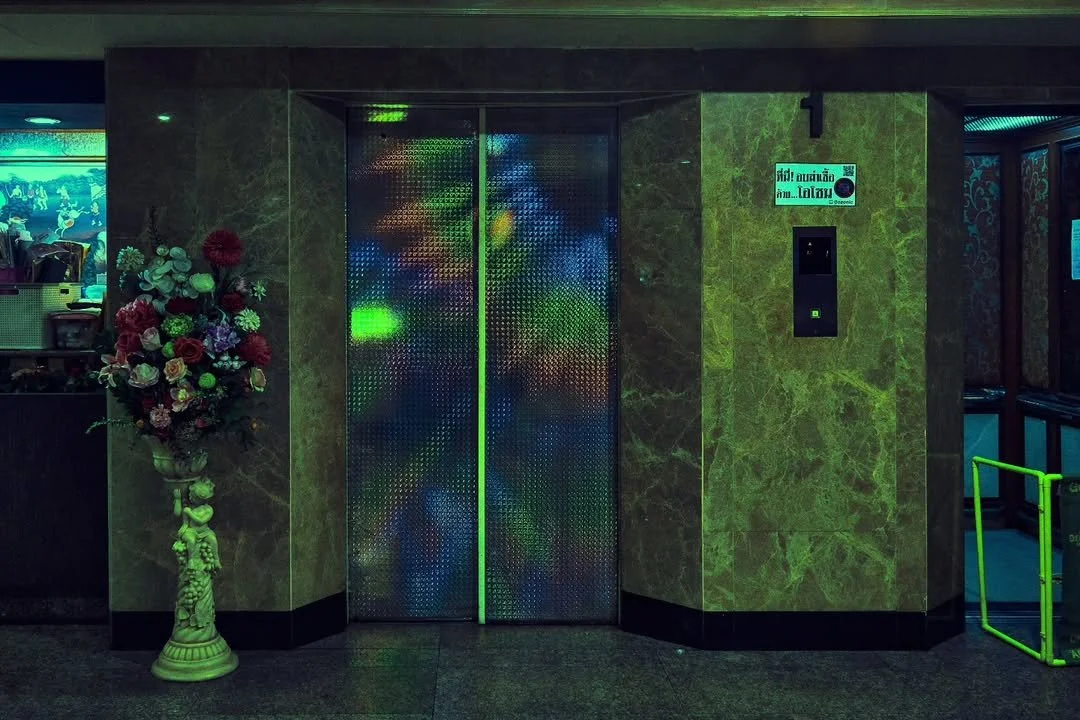
ตอนนี้ ดูสิ่งนี้
Five minutes at most -while I was staring at the post and blissfully listening to the music lyrics, obnoxiously ignoring the panic screams in the background, someone knocked heavily on my door and yelled, GET OUT, GET OUT. It was the hotel manager. “There’s a fire! Get out now.” Everyone was running and shouting. I grabbed my camera, passport, and computer. I went out. Honestly, I didn’t think it was that bad.
When I reached the entrance, I saw someone had fallen from the upper level, and was lying on the ground with a blanket covering their face. I looked up: fire was bursting out of the windows. People were hanging from their balconies to avoid the flames. That’s when I understood how bad it was. It was all pretty real and scary.
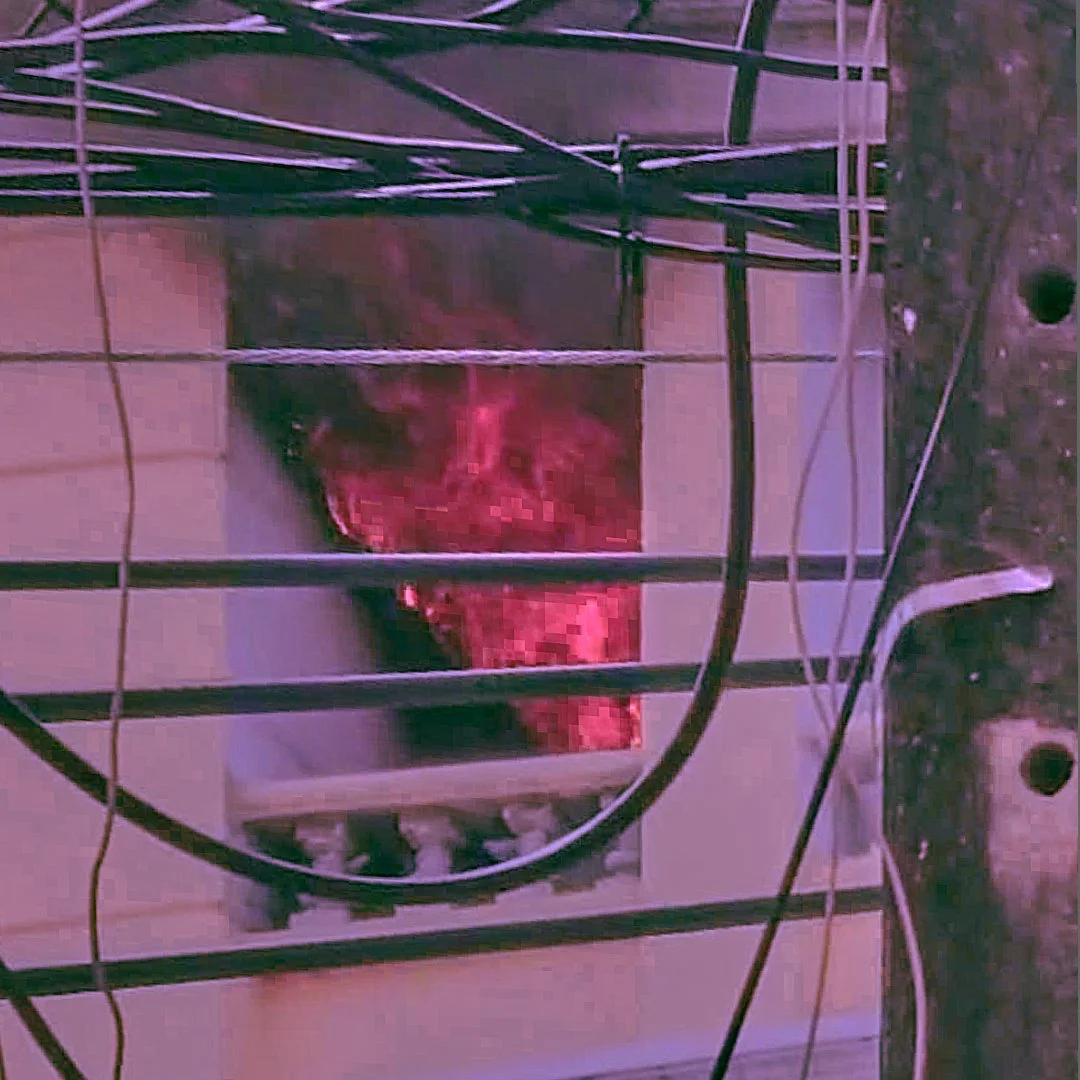
As there was nothing for me to do, I went for a walk around the neighborhood. I think this deviation from panic instead of acceptance was an efficient mechanism against fear. Had a Coca-Cola with some Pad Thai. Then I came back. Two women were hanging out of their balcony while a fire truck blasted water at them from a gigantic hose mounted on some massive metal staircase. People were praying they wouldn’t fall. Only thing u can do is wish for the best.
All in all, they told us the guy who fell from the balcony was the one who caused the fire. He had been smoking inside his room, lost his balance while hanging from the balcony trying to escape the flames, and fell headfirst to the ground. Seven floors. It’s pretty shocking how you can lose it all in one go. Everyone else was saved.
Most of the hotel guests were told to wait in the lobby of a Gym & Spa &Fitness Center (so many businesses stacked up together, I kno) next door. After a few hours, they told us we could collect our belongings as the building temperature had cooled down. We went back inside the hotel.
There was no electricity, and it had become very dark. I walked around the corridors using our cell phone flashlights. After reaching the third floor, we could use the emergency lights. There was water everywhere. The fifth floor (where my room was) was all wet. I opened my room door and discovered the whole place smelled like soot. The bathroom ceiling was ruined, and water was coming out of it. I looked at myself in the room mirror. Took a photo (for the memory). Packed my belongings.
I left the place unharmed. I actually felt pretty grateful. I don’t think of it as a bad occurrence. More of a reminder. I walked 15 mins to another hotel. Checked in. Got refunded for the remaining days at the burnt hotel. And a few days later, I got an apology from them. So the whole series ended up being that one photo of the entrance, posted five minutes before the incident. That was about it. Made me think lots.
Kodak Charmera Blind-Box: Keychain-sized Digital Throwback
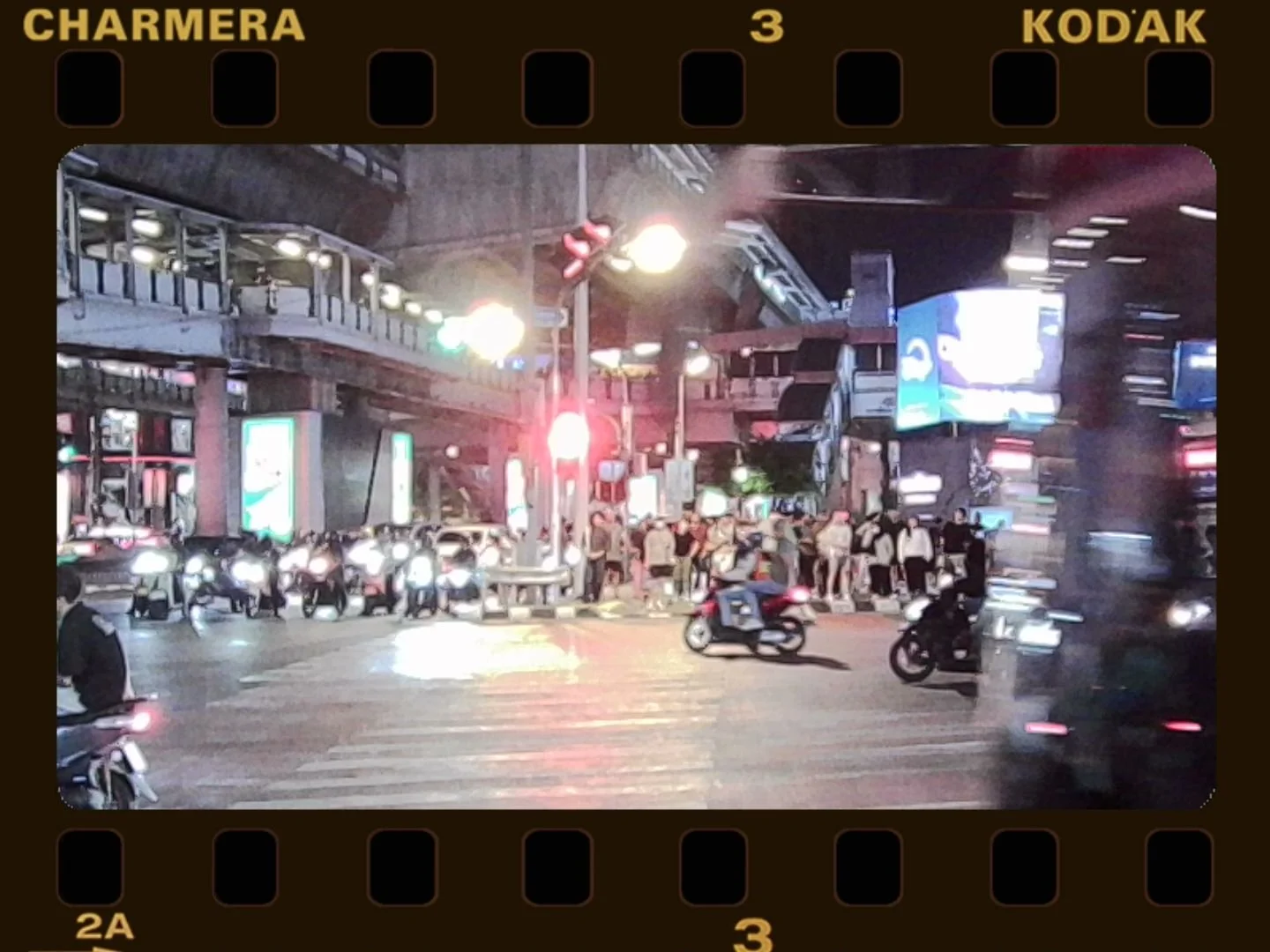
You don’t know which design you’ll get until you open it, and it’s quite random (there are six standard looks and one rare variant). I didn’t get the color I wanted, but I felt excited regardless. What u get is small enough to hang from a bag or keys, but is a fully working digital camera. It’s got a 1.6-megapixel CMOS sensor, a fixed 35mm-equivalent lens, and a simple rear screen for checking out shots. It shoots photos at 1440×1080 and video in AVI at 30 fps. A microSD slot supports cards up to 128GB, and a USB-C port for charging and file transfer.
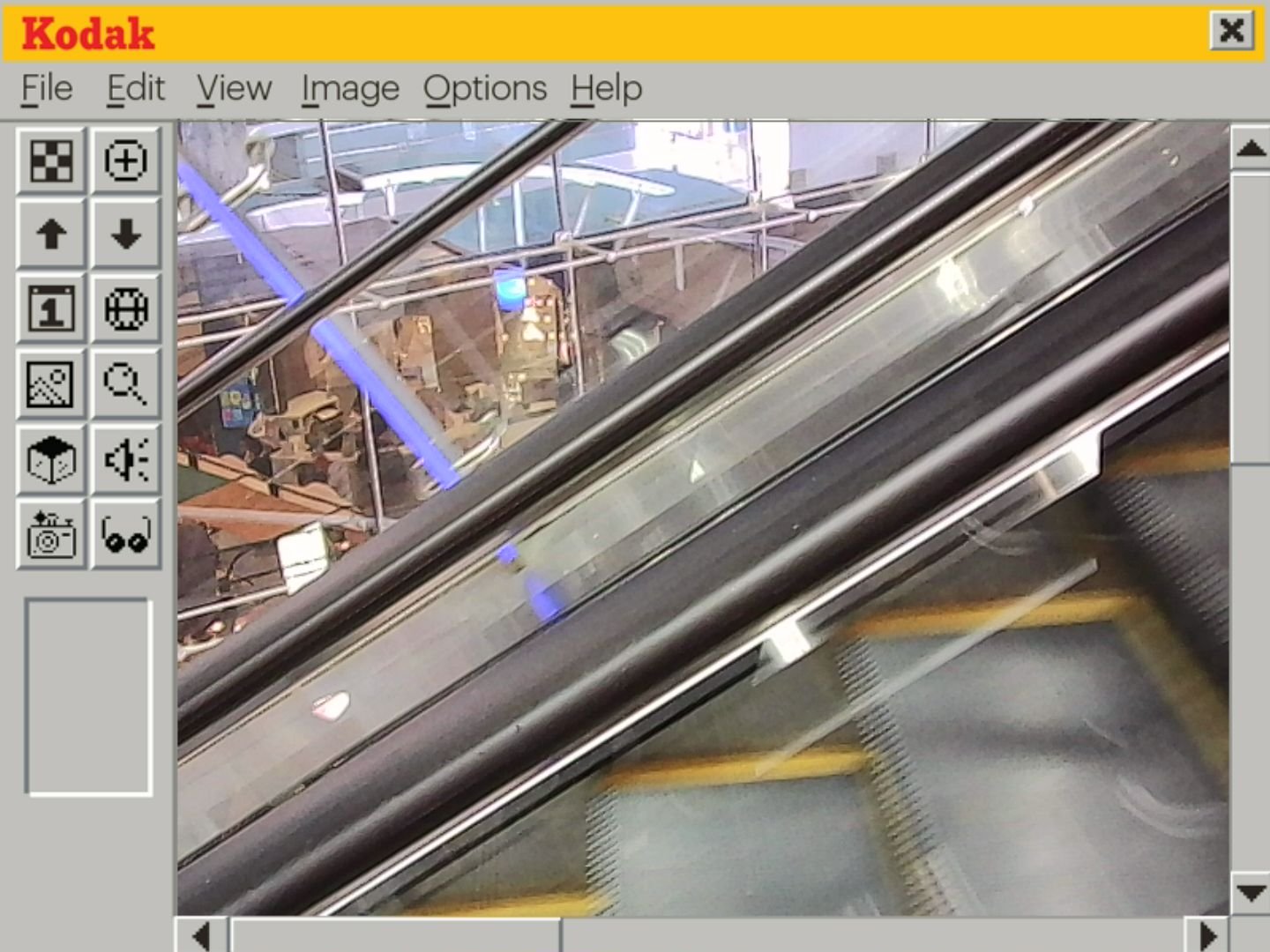
escalator at T21
It’s quite simple: plug it in and drag the files off, just like the early days of digital cameras. The shooting experience is basic and intentionally limited: no autofocus; no computational corrections; image quality that leans toward grainy and low-res. Instead of trying to impress with sharpness, the Charmera leans into lo-fi character. It includes dif digital filters, giving the photos a nostalgic, late 90s digital look straight out of cheap consumer cameras and early web uploads.
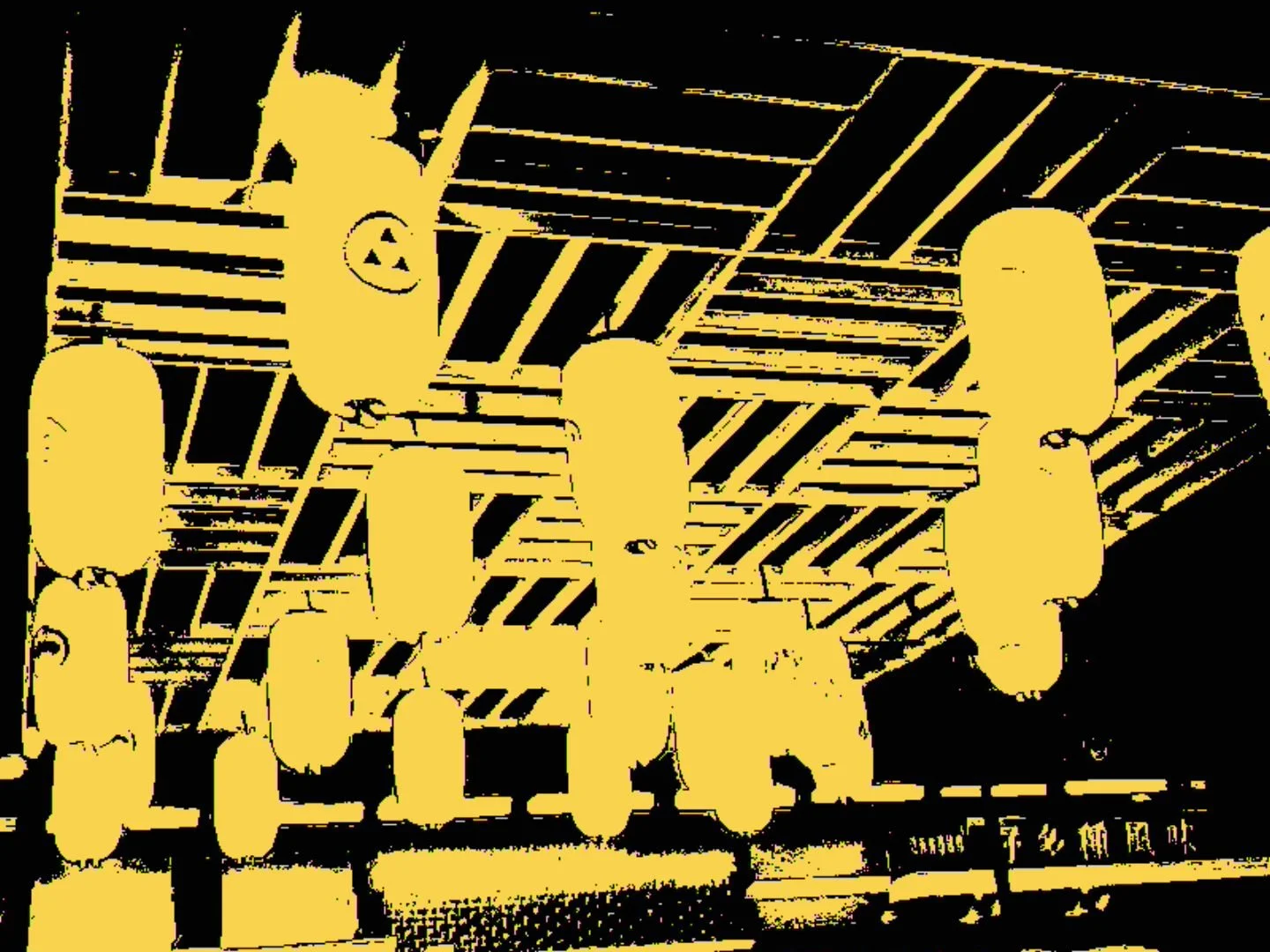
I enjoyed the monochrome filters, which made me think of pixel art, but all of them are pretty cool to be fair. The lack of high image quality is beautiful because it reminds me of those days when the internet had a lot of text, which in a way is the golden area of the internet (for me).
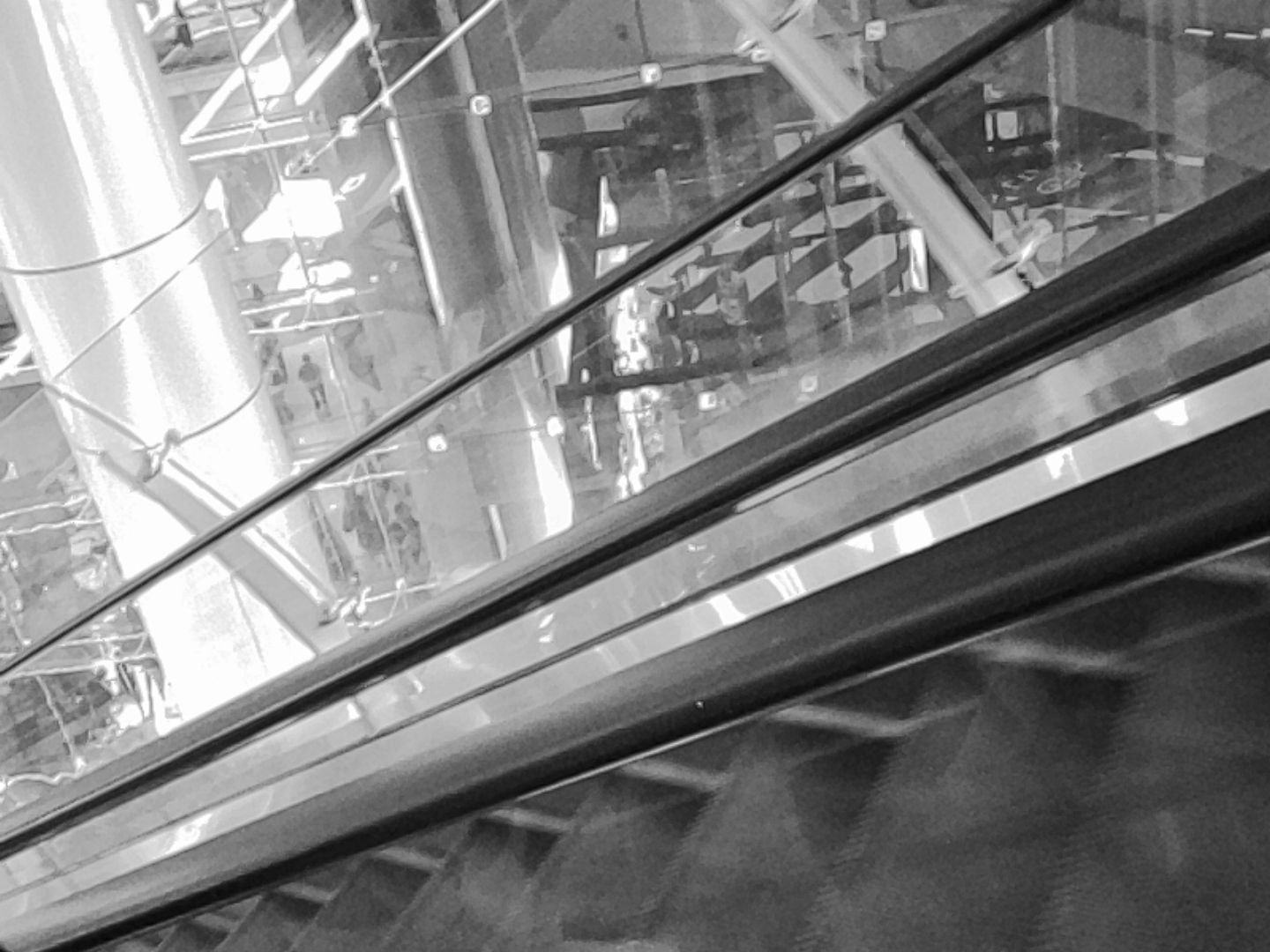
black and white setting
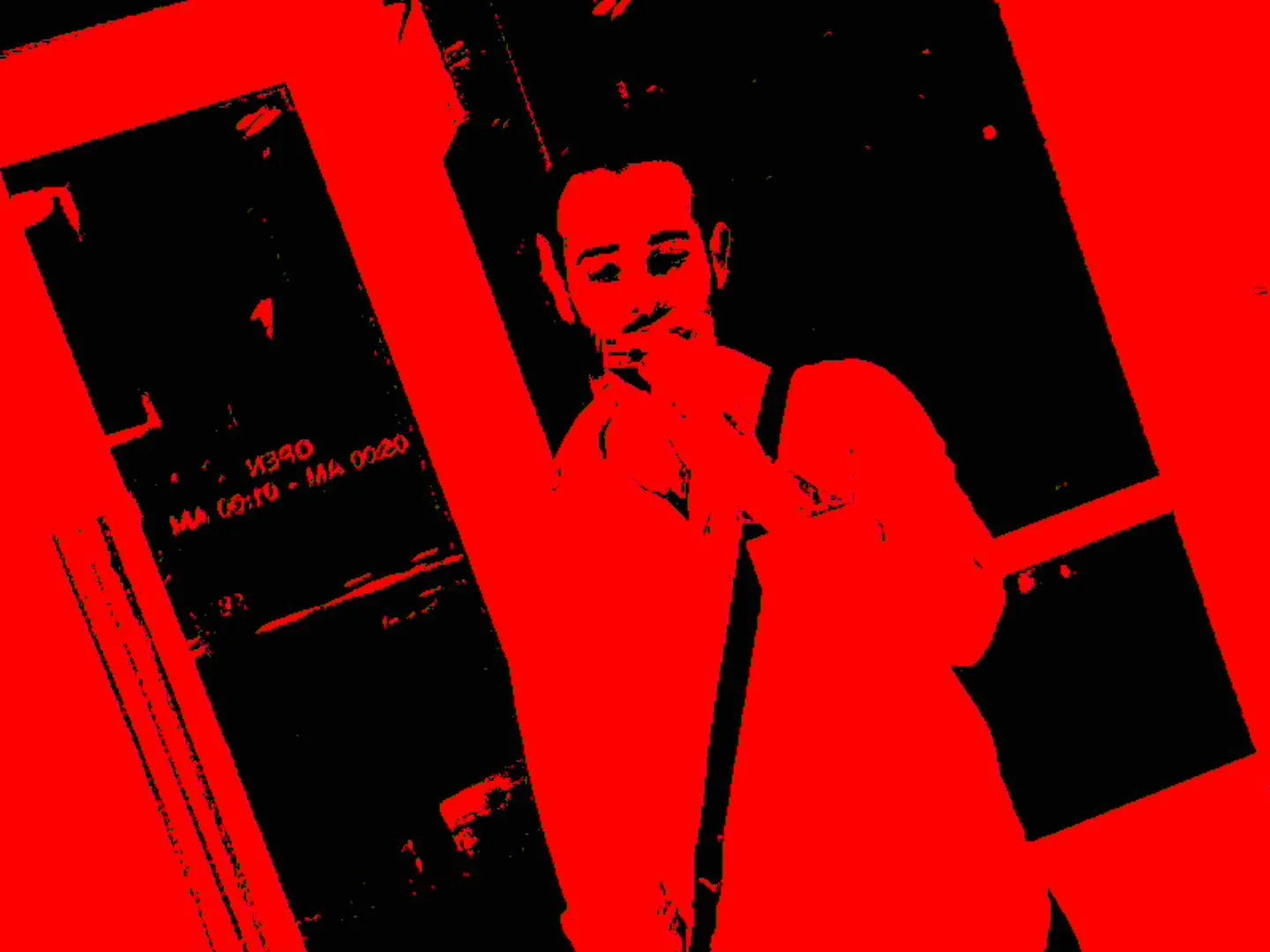
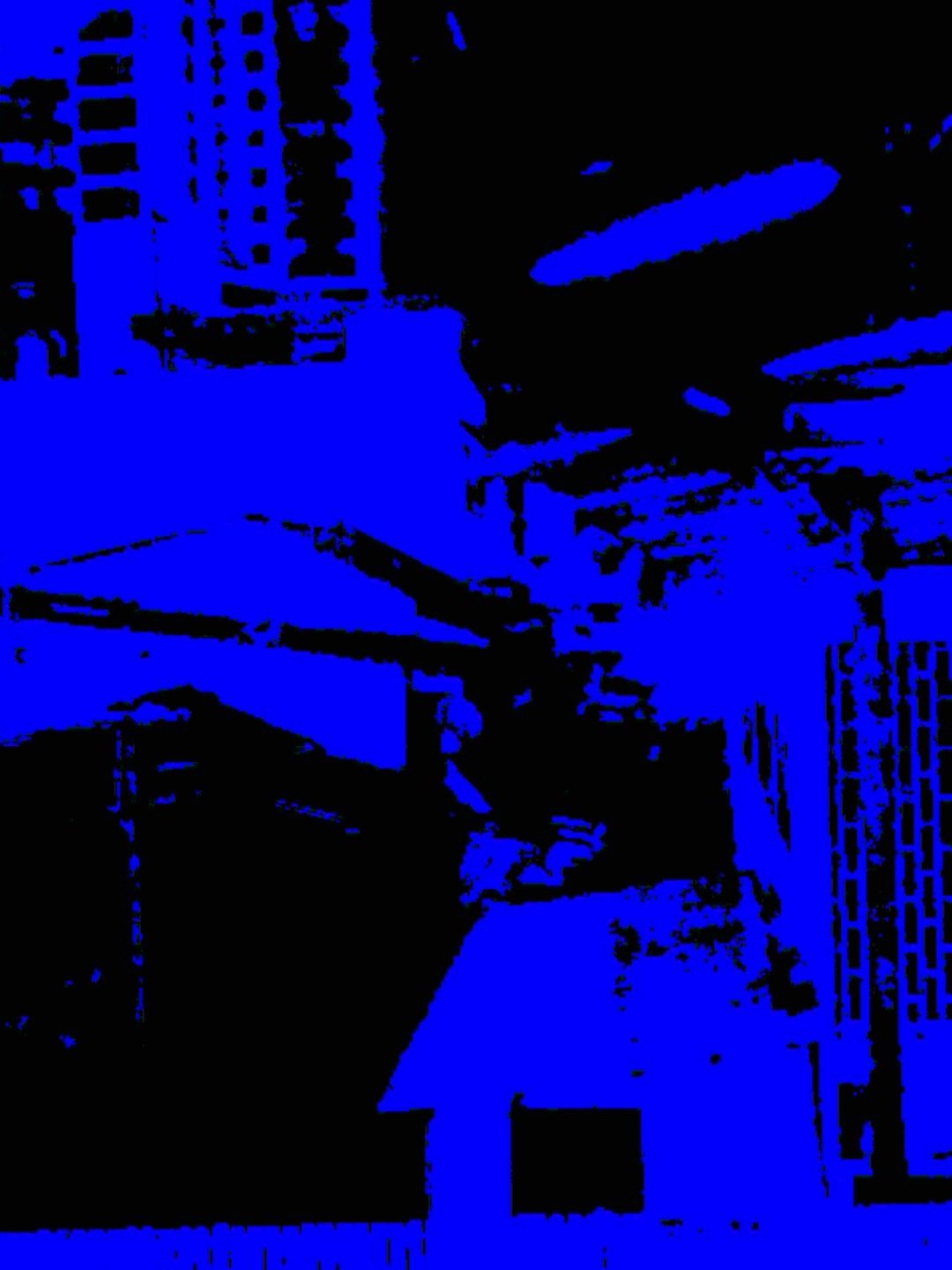
These pics I took the same day. It was a pretty chill stroll from Terminal 21 to Rama 9 at about 8 p.m. The shots haven’t been edited. I find them aesthetically very pleasing. It’s really satisfying when just embracing the camera’s natural limitations. The whole point is you get what you get, and that’s what u enjoy.